
Certain posters are alive without the need for QR codes, sensors, or interactives. They do not blink, animate, or talk back, but are seemingly responsive to the viewer. They provide comfort to people seeking wellness, energize participants attending events, spark curiosity in people who come across them, and soothe students moments before an exam intervention.
If you’ve played around with atmospheric colors and expressive layouts through an AI image generator, you’d know just how surprisingly emotional visual decisions can be. Dreamina takes this type of intuitive design one step further by making it feel more playful, giving creators the ability to create mood-responsive posters that feel in touch with their audience without relying on interactive technology.
Let’s explore how this kind of nonverbal emotional communication works, and how you can make your own mood-responsive posters using Dreamina’s 3-step creative process.
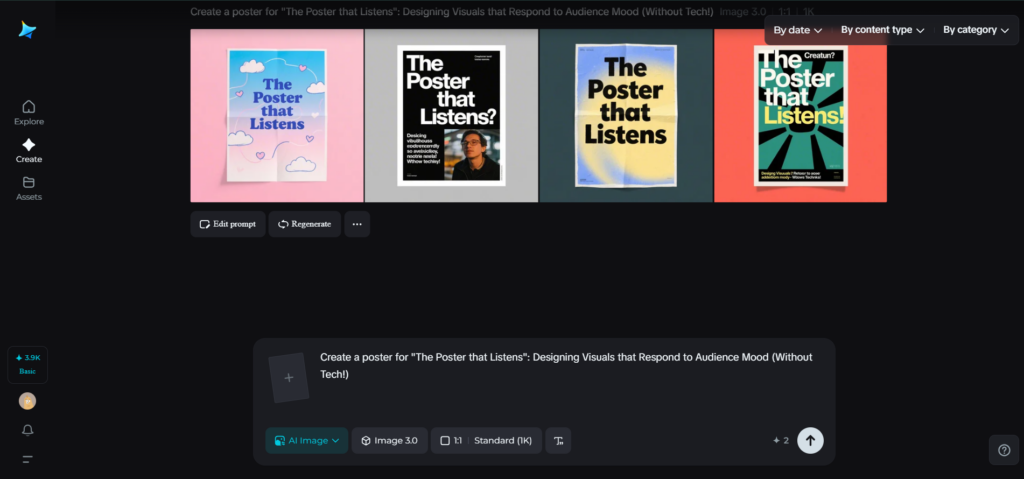
Reading the room: how posters communicate without moving
Mood-responsive posters depend on human psychology, not sensors. The viewer does nothing to the poster; instead, it’s the other way around-the poster interacts with the viewer’s mood.
Designers achieve this through three quiet, powerful tools:
- Color temperature: cool tones for reflection, warm tones for encouragement, deep tones for confidence.
- Shape language: soft curves soothe, sharp diagonals energize, wide spacing relaxes.
- Emotional composition: abundant negative space soothes; tight framing heightens focus.
All three elements work in harmony to create posters that feel human-even though they’re static paper or pixels. That’s why a nightlife poster feels bold from far away, and a meditation workshop poster feels like a soft exhale.
The reassuring poster: soft tones for wellbeing and serenity
Wellness events, therapy sessions, mindfulness retreats, and community gatherings often use posters that “listen” first and speak second. They have a quietness to them-almost like a nod of reassurance.
These comforting posters often include:
- Blended warm neutrals
- Soft, horizon-style fades
- Rounded typography
- Few elements to avoid overstimulation
They don’t drive action in a viewer; they invite them politely. The viewer feels understood because the poster speaks to the need for clarity, calmness, or safety.
The bold poster: visual punches for nightlife and high-energy events
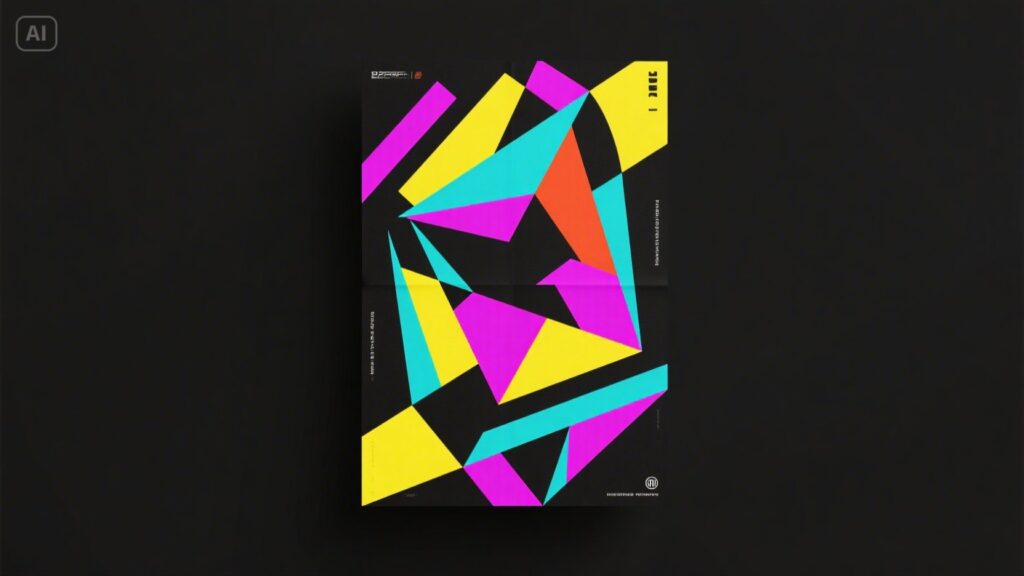
At the other end of the scale, some posters jump out like they have had three espresso shots. These designs don’t whisper — they shout, dance, and challenge.
Mood-energizing posters often use:
- Saturated neons or contrasting color pairs
- Angular shapes and kinetic layouts
- Dramatic shadows
- Tight spacing that intensifies motion
They’re not chaotic, but they’re intentionally stimulating. They tell the viewer, if you’re looking for excitement, you’ve come to the right place.
The subtle switch: When posters adapt across digital formats
The beauty of mood psychology is that it works just as well on digital posters as it does on printed ones. Online, though, designers also borrow cinematic lighting styles and atmospheric gradients that mimic professional cinematography.
This gets even more interesting when creators make use of advanced tools like Dreamina’s AI video generator to produce videos that are social media savvy. A single still frame from a generated clip can have enough lighting, depth, and color storytelling to feel emotionally responsive even when frozen.
Designing emotion-first posters: Dreamina’s atmospheric creation flow
To design a poster that feels like it’s paying attention, you don’t need interactivity, just emotional intention. Dreamina’s 3-step process helps creators frame posters to evoke a range of moods, from calm and bold to reflective, energetic, or comforting, depending on the desired audience engagement.
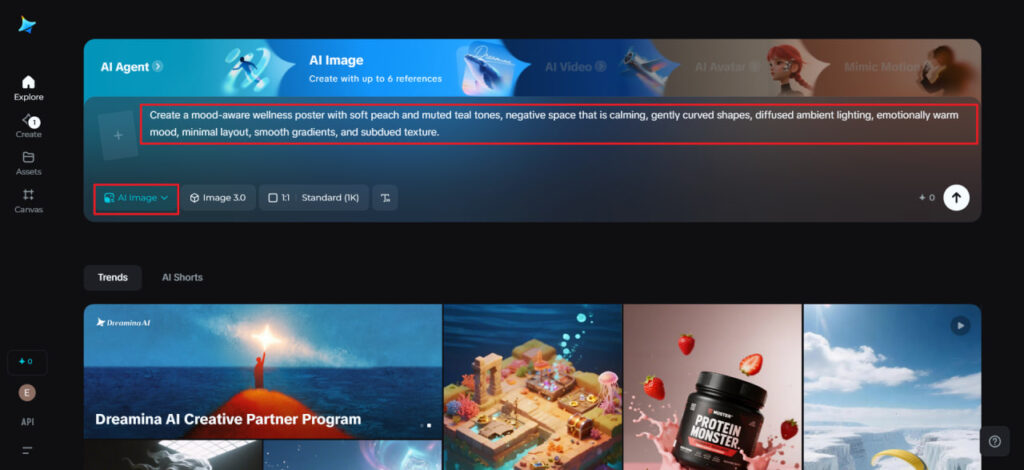
Step 1: Enter a descriptive text prompt
First, go to Dreamina and write a descriptive prompt for the emotional tone your poster is animated to respond to. Describe the colors, lighting, composition, and mood, as these help to create the audience’s emotional experience.
Here is a sample prompt for guidance: A mood-aware wellness poster with soft peach and muted teal tones, negative space that is calming, gently curved shapes, diffused ambient lighting, emotionally warm mood, minimal layout, smooth gradients, and subdued texture.
This enables Dreamina to have substantive direction in designing a poster that appears to be listening before it begins to speak.
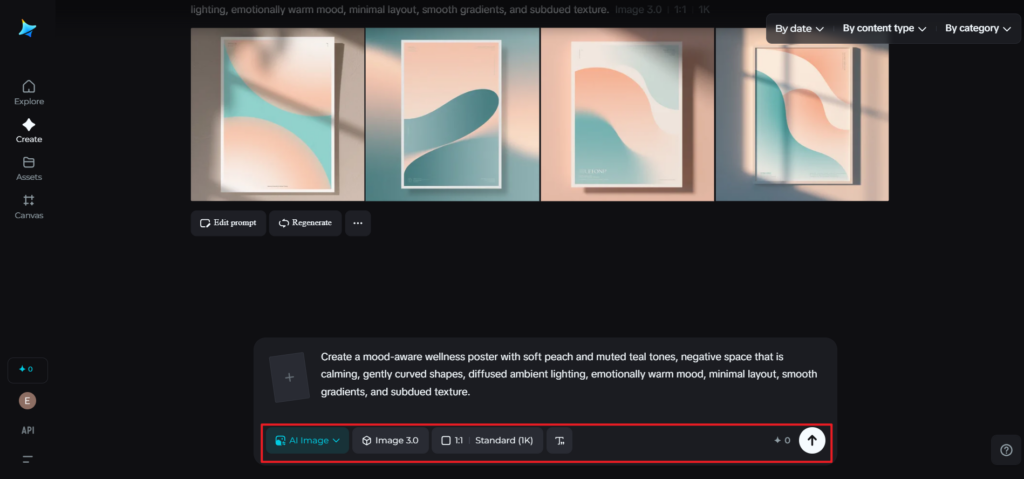
Step 2: Tweak parameters and generate
Select your model based on the style you prefer, set the aspect ratio to match your poster format, choose your preferred size, and then select either 1k or 2k depending on the desired clarity. Once your settings have aligned with your mood goals, click on Dreamina’s icon in order to generate your poster. In just moments, you’ll see how that emotional tone comes to life visually.
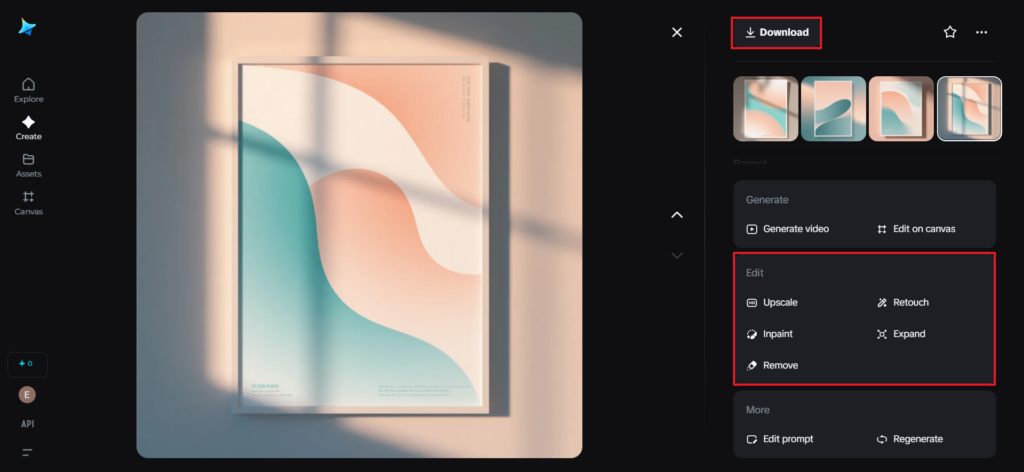
Step 3: Modify and download
Refine areas, expand to widen, remove to clear, or retouch to enhance color softness or lighting using Dreamina’s inpaint. Once your mood-responsive poster is exactly what you had in mind, click the Download icon to save your final design.
Where static visuals start to feel personal
Mood-based posters are effective because they convey one simple truth: people tend to read visuals with their emotions first and logic second. When a design resonates with how the viewer already feels or how they want to feel, the connection is instant.
This approach turns posters into something more personalized:
- Wellness visuals feel like they empathize.
- Event posters seem to match your energy.
- Educational posters feel gentle, not overwhelming.
- Artistic posters feel introspective and thoughtful.
When a poster listens, the viewer sees themselves. You can try experimenting with atmospheric blends or expressive layouts through Dreamina’s AI art generator and notice how even small aesthetic changes shift the whole emotional temperature of a design.
Conclusion: human-feeling posters
The notion of a poster “listening” might sound fanciful, but mood psychology makes it surprisingly real. A well-crafted layout can convey calm, power, energy, or safety without requiring any interactivity. Dreamina adds this creative layer to the process, affording designers the ability to build posters that feel intuitive, expressive, and even emotionally aware.
With the right colors, shapes, and composition choices, your visuals can quietly read the room — and respond beautifully. In a world crowded with noise, a poster that listens is a poster people remember.