
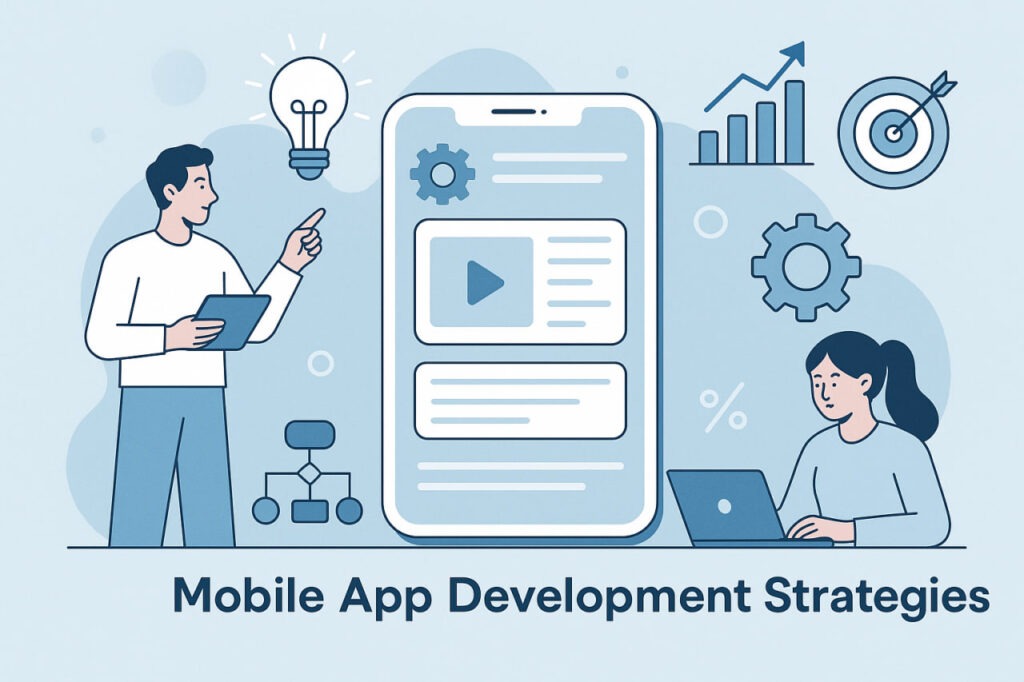
A strong mobile app is very important for any digital business. The market moves quickly. By 2026, every business must have a strategic app plan. The objective is to create applications that are more than just novel. An application should address a genuine issue for a user or company. Here is the guide for mobile app development you can do right now to ensure the success of your app.
Start with a Clear Goal
Many apps fail. They focus on cool technology instead of a clear purpose. To succeed, you must know exactly why you are building the app.
What to do:
- Know the Problem: Determine the business problem your app will answer. For example, will it make work easier, generate revenue, or benefit customers?
- Think of the User: Map out what the user will do. Why would they come back? A good experience keeps people using your app.
- Pick the Right Type: Choose how to build it. Will it be a custom app for one system, a cross-platform app, or a simpler business tool?
- Group Planning: The Entire team of designers, developers, and business owners should collaborate from the start to discuss everything related to app development.
Example: Don’t just tell them to develop the app. Say, “build an app that helps our team finish reports 40% faster.” This gives everyone a clear target.
Choose Cross-Platform Apps
Building apps for both platforms, i.e iOS and Android, is time-consuming and expensive. Now, you can build one app that works well on all phones. This is called cross-platform development.
What to do:
- Good Framework: Use tools like Flutter or React Native to write your code. By this, the code is compatible with both Android and iOS platforms.
- Cross-platform Compatibility: Build an app that works on both Android and iOS. This includes smartphones, iPads, and the forthcoming foldable smartphones.
- Native Feel: The app should feel natural on its operating system. An iPhone app must feel like it was made for it.
- Build Once: This approach saves time and money. You only need to write the core code once.
If you hire a partner company, make sure they are experts in cross-platform apps. They should not treat it as a less important option.
Use AI for a Personal Touch
Artificial Intelligence (AI) is an extra benefit; it’s a necessity. It makes apps smarter and better for the end user.
What to do:
- Add Intelligent Features: AI can be used for voice commands, forecasts, and suggestions.
- Preserve Data on Device: Try to process data directly on the phone. Compared to transferring everything to the cloud, this is quicker and more private.
- Customise the Experience: Show the user offers and pertinent content based on your knowledge of them.
- Monitor Usage: Find out which features users utilise and how long they spend using the program. This indicates what is effective.
Example: A business app could show each worker only the tasks they need for their job. This makes the app simpler and faster for them.
Get Ready for New Kinds of Devices
Phones are not the only screens anymore. Plan for the future. Consider wearables like smart watches. Include other smart devices. Also, prepare for Augmented and Virtual Reality (AR/VR).
Actionable steps:
- Smooth Experience: A user should feel smooth app transitions without any lag.
- Connect to Other Tech: If it makes sense, let your app work with other devices. A shopping app could use AR to let you “try on” clothes.
- Save Battery: Don’t make an app that drains the phone’s battery quickly. Users will delete it.
Make Security a Top Priority
Apps handle important data, so they must be safe and private. Users need to trust your app with their information.
Strategies include:
- Use Modern Architecture: Build your app using separate modules. This microservice approach is more flexible and reliable than a single, large codebase.
- Build Security In: Check for security issues from day one. It must be a core part of development, not an extra step later.
- Respect Privacy: Only collect the user data which is necessary. Keep it safe and be transparent to users about how their information is being used.
- Follow the Rules: Your app should comply with privacy laws according to the operational region. This is critical for a global user base.
Build Apps That Help Businesses Make Money
The biggest value is often in apps used for work. These are called business app solutions.
How to approach that:
- Solve a Business Problem: The app should make the process cheaper, faster, or with fewer mistakes. This is the real value.
- Track Success: Build in tools to see how the app is used and if it’s saving money. You need to prove the app is worth the investment.
- Connect to Other Systems: The app ought to be compatible with the other software that your business uses, such as its ERP or CRM programs.
- Employ Experts: Partner with an app development firm that understands business needs. They should know corporate structures and internal processes.
Plan for Updates and Growth
An app is never “finished.” You need to keep improving it after it launches. The world of technology moves too fast to stand still.
What to do:
- Update Frequently: Use a flexible development approach. This allows you to regularly add new features and fix issues.
- Test New Concepts: To determine whether people enjoy new features, test them out first on small groups of users.
- Pay Attention to Users: Make decisions on what to build or fix next based on ratings and comments. Your users will communicate their desires to you.
- Be Prepared to Expand: As your app gains popularity and users, your technical backend can accommodate those users.
Get Your App Noticed and Used
A great app is useless if no one finds it. You must have a marketing plan to invite users.
Consider:
- App Store Optimisation (ASO): Use the right keywords and visuals. This helps users find your app. It is like SEO for app stores.
- Simplify Onboarding: Make the first experience easy for new users. A complicated start will make them leave.
- Maintain Engagement: Send useful offers or messages to bring users back. Avoid sending too many.
- Choose a Business Model: Choose your app’s income model. It can be a subscription or a one-time purchase. Select the strategy that best fits your app’s purpose and audience.
Choose the Right Partner
Choosing who builds your app is a big decision. A good partner can make the process smooth. A bad one can cause many problems.
Look for a partner that has:
- Experience: A proven track record in cross-platform apps and business tools.
- Good Examples: Strong case studies that show their past work.
- The Right Skills: Ability to handle security, data, and connect to other systems.
- Good Support: A clear process that offers long-term support after the app is built.
Checkpoints for Success
Before you begin, make sure you have a clear plan. Do not start developing until you can answer these questions.
Your checklist should include:
- A clear goal and a way to measure it.
- The right technical design has been gn chosen.
- A plan for different devices and screens.
- A plan for using AI personalisation.
- Security and privacy are built into the plan from the start.
- A system for updates, tracking data, and listening to feedback.
- A plan to get users and make money from the app.
Measure these things regularly: How many people open the app? How many come back after a week? Which features do they use? Is the app crashing? Are you meeting your business goals?
Conclusion
Getting successful in 2026 is about strategy, not just endless coding. You need a strong plan before writing the first line of code. Use cross-platform tools to save time and money. Add smart AI features to make your app helpful. Make security a top priority to earn user trust. The right plan and the right partner, like will help you build an app that does not just exist.